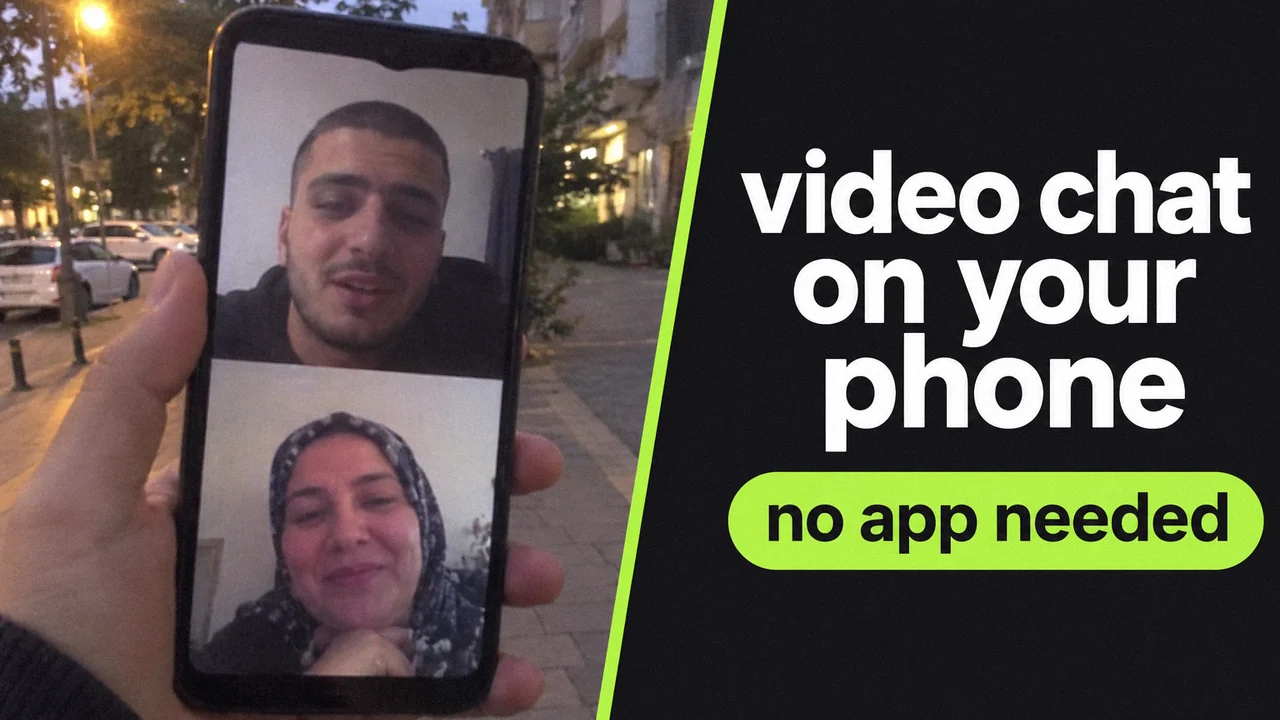
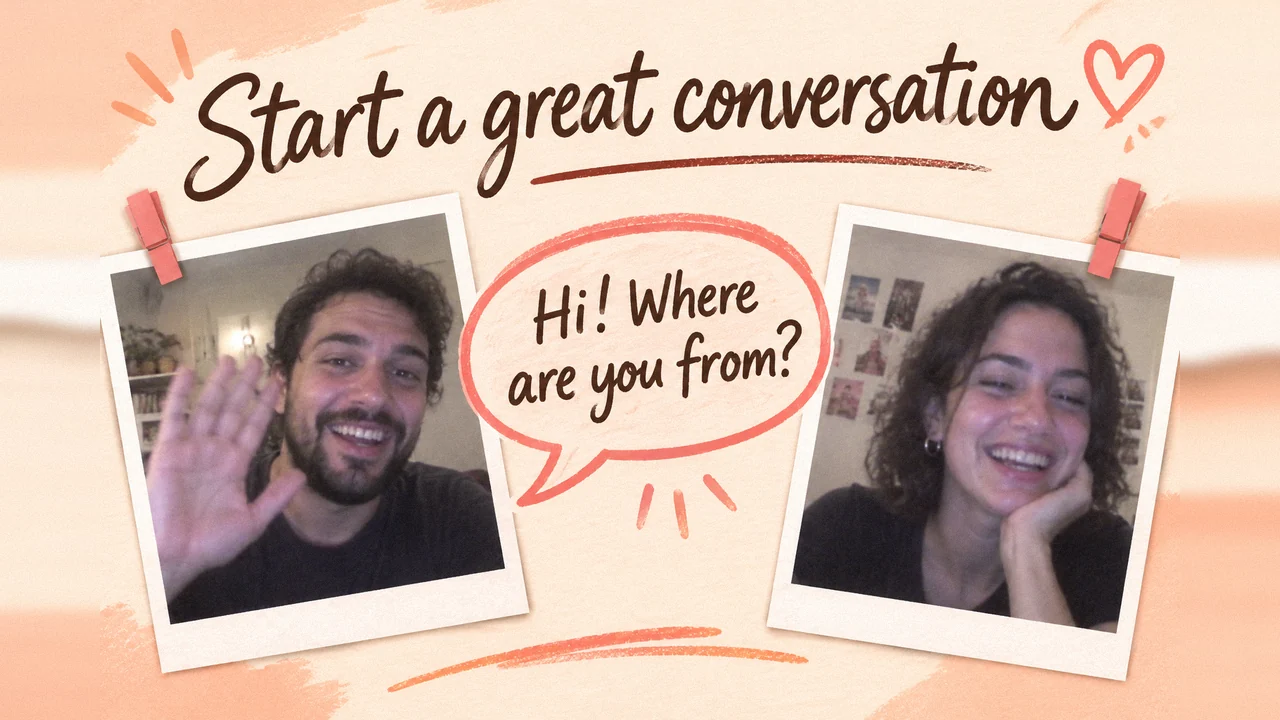
Short answer: Random chat lets you practice a language with real people for free, straight from your browser. Start with text chat if you are a beginner, open with a short message in the language you are learning, say that you are learning it, and move on politely if the other person does not speak it. Five short chats a day do more for your confidence than one long lesson.
Language apps teach you words. Talking to strangers teaches you to use them: at real speed, with real accents and without a script. This guide shows you how to get the most out of it on Omegle Online.
Why random chat works for language practice
- Real conversations. You hear how people actually talk, including the everyday expressions that textbooks leave out.
- Low pressure. Nobody knows you, so a mistake is not embarrassing. If a chat goes badly, you simply start a new one.
- No booking, no cost. There is no tutor to schedule and nothing to pay. You can practice for five minutes whenever you have time.
- People from all over the world. Every new chat can bring a different country, a different accent and a different topic.
Text chat or video chat?
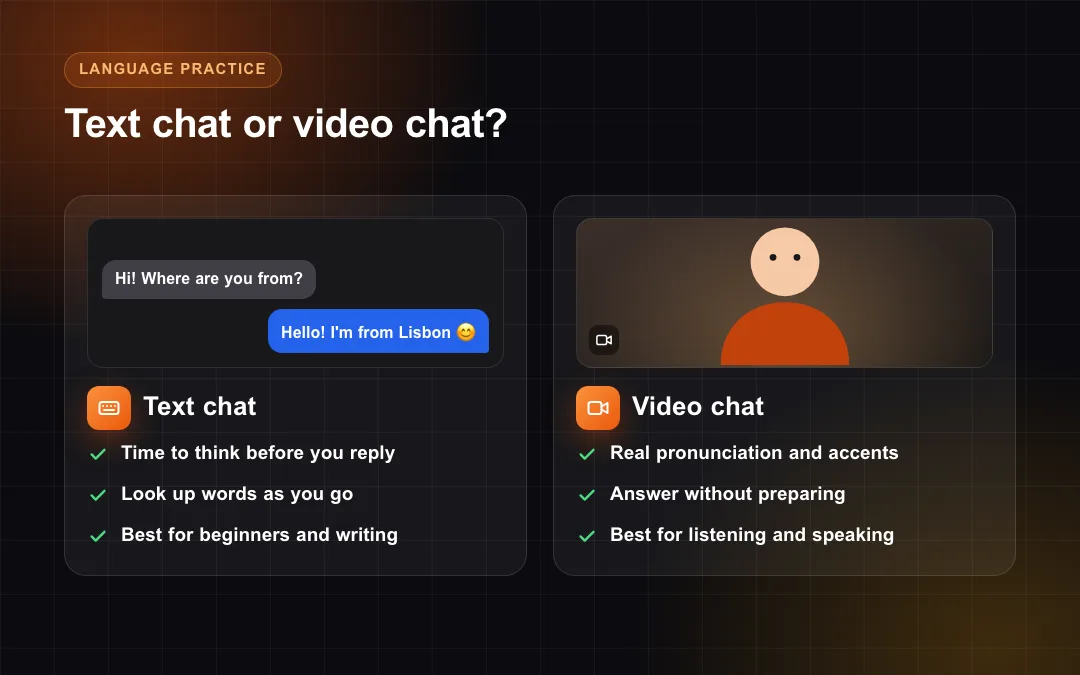
Both work, but they train different skills. Text chat gives you time to read, think and look up a word before you reply, so it is ideal for beginners and for practicing writing. Video chat trains listening and speaking: you hear pronunciation, see reactions and learn to answer without preparing. Many learners start with text and switch to video once short conversations feel easy. Our comparison of text chat and video chat explains the other differences.
How to find someone who speaks your target language
On Omegle Online you are paired at random. The language you choose for the website changes the menus and pages, not who you meet, as explained in which languages Omegle Online is available in. That is why the first message matters. In text chat, the flag shown next to your partner gives you a hint: it is based on the language settings of their browser, so it suggests a country, not a guarantee.
- Open with a short greeting in the language you are learning.
- Say straight away that you are learning it and would like to practice.
- If the other person does not reply or does not speak the language, thank them and move on to someone new.
- When you find a speaker, ask whether they would like to practice your language in return. Swapping languages keeps both sides interested.
Openers that work
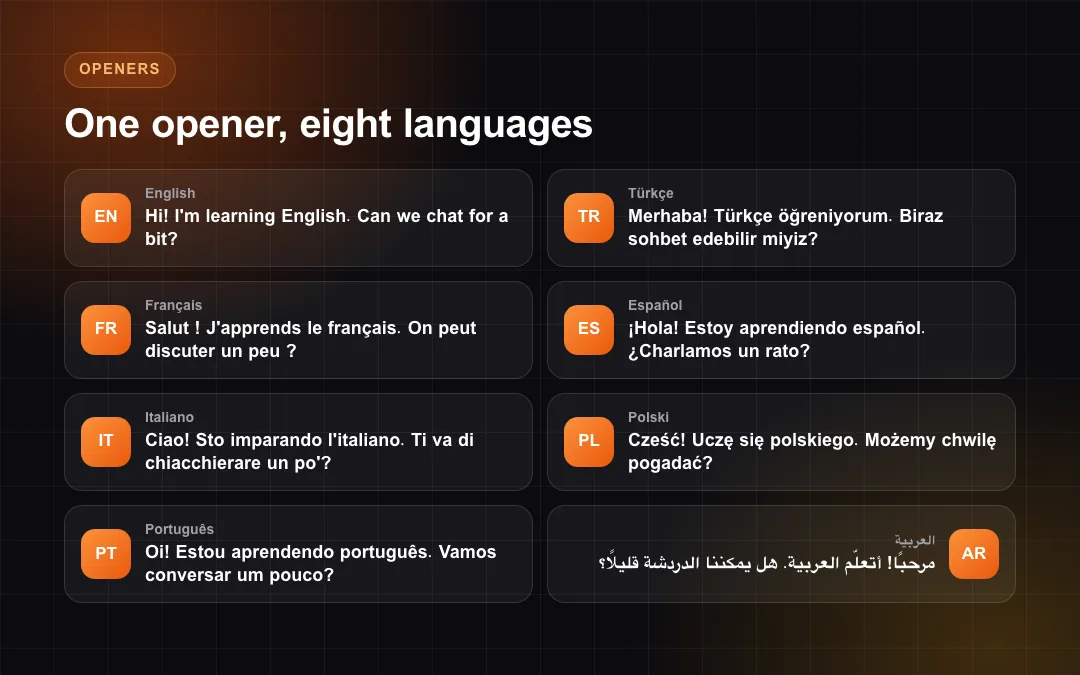
A good opener is short, friendly and tells the other person what you want. Write it in the language you are learning, even if it is simple:
- "Hi! I am learning Spanish. Can we chat in Spanish for a few minutes?"
- "Hello! Where are you from? I am practicing my French."
- "Hi, my Italian is not perfect yet. Is it OK if we talk slowly?"
Keep the conversation going
Beginners often freeze after the greeting. Everyday topics are the easiest way through: food, music, films, the weather where the other person lives, or what a normal day looks like in their country. Ask open questions that cannot be answered with a single word, such as "What do people eat for breakfast where you live?" For more ideas, read how to start a conversation with a stranger.
Learn a few phrases by heart before you start. They keep the chat alive when you get stuck:
- "Could you say that more slowly, please?"
- "How do you say … in your language?"
- "Sorry, I did not understand. Could you write it?"
- "Please correct me if I make a mistake."
Make every chat count
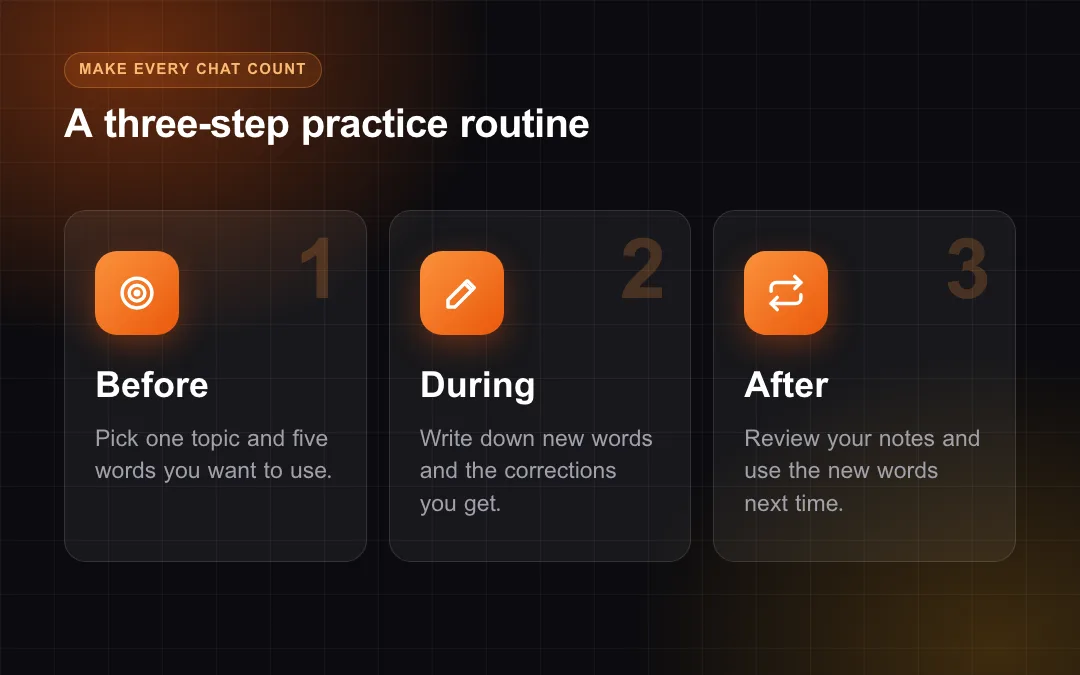
Short, regular practice works better than a single long session. A simple routine helps you remember what you learn:
- Before: pick one topic and five words you want to use.
- During: write down new words and any corrections you get.
- After: read your notes once more and use the new words in your next chat.
Stay safe while you practice
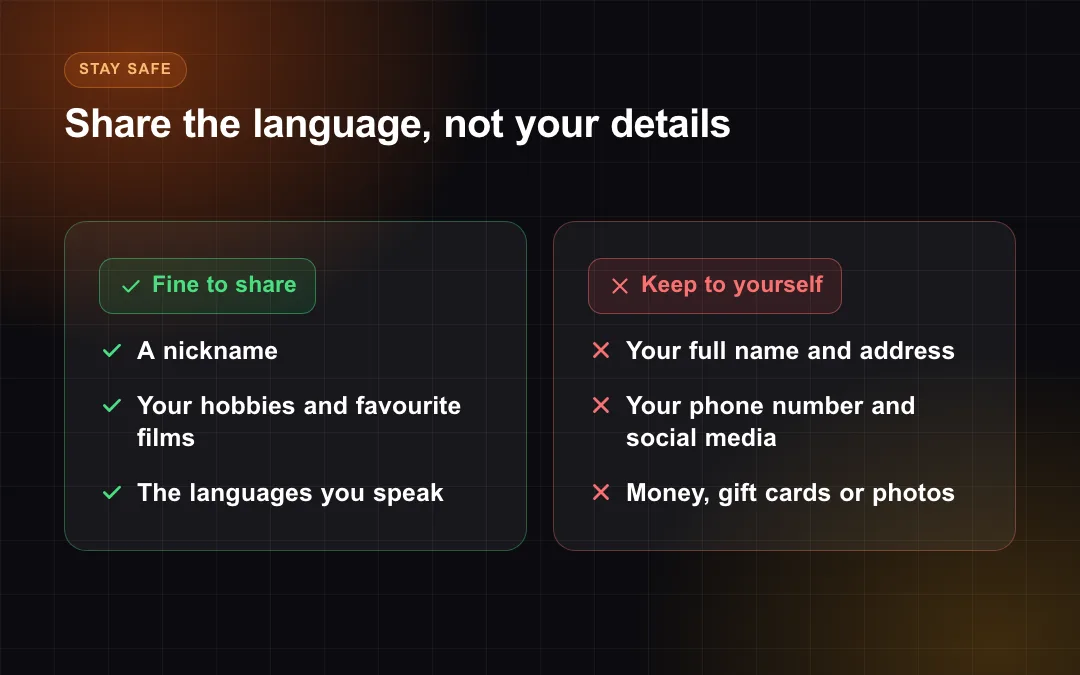
A friendly language partner is still a stranger. Keep these habits, even when a chat goes well:
- Do not share your full name, phone number, address or social media accounts.
- Be careful if someone quickly asks you to continue on another app. That is a common first step in a scam.
- Never send money, gift cards or photos to someone you have just met.
- Follow the community rules: for example, do not ask your partner for their gender.
Our random video chat safety guide and the article on video chat scams and sextortion cover the warning signs in more detail.
Ready for your first practice chat? Start with text chat, or open a video chat from the home page. If the first person does not speak your language, the next one might.